Aurora, Illinois, ranks as the second-largest city in the state, and every summer its residents and business owners tackle deck builds, landscaping overhauls, driveway replacements, and full home renovations. A summer storage container rental Aurora residents can place on-site keeps tools, materials, and household items organized and protected while work is underway.
This guide answers the ten most common questions about renting a portable storage container for seasonal outdoor projects in Aurora during the 2026 season, covering permit rules, sizing, pricing, delivery speed, heat protection, and the rent-versus-buy decision. If you need outdoor project storage Aurora IL for a project this season, these tips will save you time, money, and headaches.
Have questions about renting a storage container this summer? Reach out to Great Lakes Kwik Space today for fast, straightforward answers.
Booking your summer container rental in early or mid May gives you the widest selection of sizes and the shortest wait for delivery. Demand for portable storage in the greater Aurora and Kane County area spikes between Memorial Day and the Fourth of July, when most homeowners begin outdoor renovations. Locking in a rental four to six weeks before your project start date helps you avoid scheduling conflicts and potential surge pricing.
Aurora’s average last frost date falls around April 25, according to the Midwest Regional Climate Center. Concrete pours, exterior painting, and landscaping work become practical once overnight lows stay above 40°F consistently, which typically happens in the first week of May. Aligning your container delivery with that window means materials arrive on-site right when conditions allow work to begin.
For commercial contractors managing multiple Aurora job sites, reserving containers in Q1 of 2026 is a smart move. Supply tightens as the season progresses, and a two-week delay in container delivery can stall framing, roofing, or paving schedules. Early reservations also let you negotiate monthly rate locks rather than paying week-to-week premiums.
If your project timeline is flexible, consider a late-summer rental starting in August. Demand begins to taper after Labor Day, and some providers offer discounted rates for rentals extending into October. A storage container summer Aurora rental booked during this shoulder period can cut costs by 10 to 15 percent compared to peak-season pricing.
Most storage container rental agreements in Aurora run on a 28-day billing cycle, but you can keep a unit on your property for as long as your project requires. Month-to-month terms are standard. Some providers also offer weekly rentals for short demolition or cleanout jobs lasting seven to fourteen days.
The City of Aurora’s municipal code addresses temporary structures placed on residential lots. Containers positioned on a private driveway or within a fenced yard for fewer than 60 days typically do not trigger a zoning review, but placement on a public right-of-way or street requires a temporary encroachment permit from the city’s Engineering Division. Contact Aurora’s Building and Permits Department at (630) 256-3080 to confirm current 2026 requirements for your specific address.
Homeowners’ association (HOA) rules add another layer. Several Aurora subdivisions, including communities in the Fox Valley area, impose their own limits on container placement duration, color, and screening. Review your HOA covenants before scheduling delivery to avoid fines or forced removal.
For business properties zoned commercial or industrial along routes like Route 59 or Indian Trail Road, container placement is generally less restricted. However, containers must not block fire lanes, ADA-accessible paths, or sight lines at intersections. Your provider should confirm clearance requirements during the scheduling call.
Do you need a permit to place a storage container on your driveway in Aurora, IL during summer? In most residential cases where the container sits on your own driveway or within your property line for under 60 days, a permit is not required. Longer placements or containers set on a public street do require city approval.
Aurora follows the 2021 International Building Code as adopted by the State of Illinois, with local amendments. Temporary storage structures under 200 square feet that remain on-site for fewer than 180 days fall outside the standard building permit process, but the city reserves the right to enforce nuisance or code-compliance actions if a container creates drainage issues, blocks a sidewalk, or violates setback distances.
To stay compliant in 2026, follow these steps:
If your project involves a construction dumpster alongside a storage container, Aurora may require a separate right-of-way permit for the dumpster. Bundling both requests through the Engineering Division speeds up approval.
Ready to schedule your summer container delivery in Aurora? Contact Great Lakes Kwik Space for a free estimate and same-week availability check.
Choosing the right container size prevents you from paying for unused space or cramming materials into an undersized box. Four standard sizes cover the vast majority of residential and commercial outdoor project storage Aurora IL job sites demand.
| Container Size | Exterior Dimensions (L × W × H) | Usable Capacity | Best For |
| 10-foot | 10′ × 8′ × 8’6″ | ~590 cu ft | Small bathroom or kitchen remodel staging |
| 20-Foot | 20′ x 8′ x 8’6″ | ~1,170 cu ft | Multi-room renovation, garage cleanout |
| 40-foot | 40′ × 8′ × 8’6″ | ~2,390 cu ft | Whole-house renovation, landscaping equipment |
| 40-foot High Cube | 40′ × 8′ × 9’6″ | ~2,390 cu ft | Multi-phase construction, commercial buildouts |
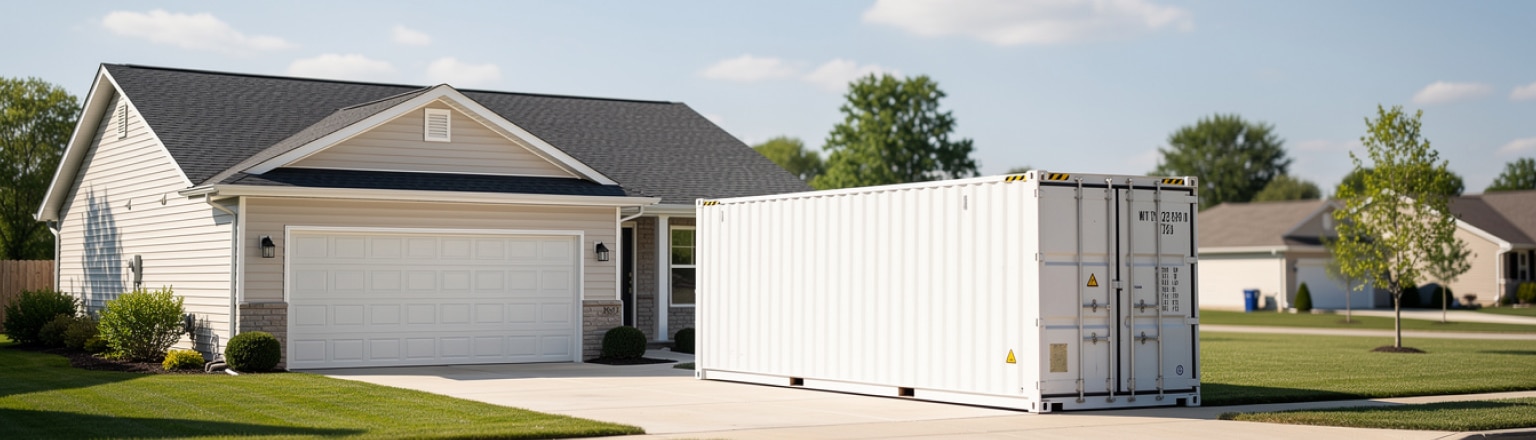
A 20-foot unit is the most popular choice for summer home renovation projects in Aurora. It holds the contents of a two-bedroom apartment or a full garage worth of tools and materials. For deck-building or roofing jobs, the 20-foot container stores lumber, shingles, and power tools with room to spare.
Contractors working on commercial properties along Aurora’s Ogden Avenue corridor or in the Fox Valley Mall area often rent 40-foot containers. These units accommodate scaffolding, drywall pallets, and HVAC components simultaneously. Pairing two 20-foot containers side by side is an alternative when lot geometry does not support a single 40-foot placement.
High-cube variants add an extra foot of vertical clearance (9’6″ total height), which matters when stacking furniture or storing tall equipment like ladders and pipe sections. Ask your provider whether high-cube units are available for 2026 summer delivery in Aurora.
Illinois summers push daytime temperatures above 90°F regularly between June and August, and humidity levels in the Aurora area often exceed 70 percent. Inside an unventilated steel container, interior temperatures can climb 30 to 40 degrees above ambient air temperature, reaching 120°F or higher. According to the National Oceanic and Atmospheric Administration (NOAA), the Chicago metro region, which includes Aurora, recorded 18 days above 90°F during the 2024 summer season, and 2026 forecasts suggest similar patterns.
Heat and Humidity Protection for Summer Container Storage in Aurora: Place a reflective tarp or radiant barrier over the container roof to reduce solar heat gain by up to 40 percent. Use a battery-powered dehumidifier inside the unit and elevate items on pallets to prevent moisture wicking from the steel floor.
Here are specific steps to protect your belongings:
Climate-controlled container options exist but cost 30 to 50 percent more per month. For most renovation staging and outdoor project storage, passive cooling methods deliver adequate protection at a fraction of the price.
Businesses across Aurora’s commercial districts use portable containers to stage equipment, secure inventory, and manage waste during summer construction and landscaping seasons. When you rent storage containers Aurora businesses use, having inventory on-site eliminates daily trips to an off-site storage facility, cutting fuel costs and labor hours.
Landscaping companies working in Aurora’s residential neighborhoods store mowers, trimmers, sod pallets, mulch bags, and irrigation components inside 20-foot containers placed directly at the job site. Construction firms handling tenant buildouts in Aurora’s downtown district or along New York Street use 40-foot units as mobile tool cribs and material staging areas.
For multi-week commercial projects, ask about ground-level delivery. A tilt-bed truck places the container flat on the ground without a chassis, which means workers walk in and out at grade level rather than climbing into a raised trailer. This setup improves safety and speeds material handling.
Insurance is another consideration. Most commercial general liability policies cover contents stored in a rented container on a job site, but confirm coverage limits with your insurer before loading high-value equipment. Some container rental providers offer supplemental cargo insurance for $50 to $100 per month.
Federal, state, and local regulations restrict what goes inside a rented storage container. Violating these rules can void your rental agreement, trigger fines, and create serious safety hazards.
Prohibited items include:
Common renovation materials like paint cans, stains, and adhesives occupy a gray area. Small quantities of latex paint (water-based) are generally acceptable. Oil-based paints, solvents, and chemical strippers are not. When in doubt, check the material safety data sheet (MSDS) for each product and ask your rental provider about their specific policy.
The rent-versus-buy decision hinges on how many months per year you need the container and whether you have permanent space to store it when not in use.
Renting makes sense when:
Buying makes sense when:
A used 20-foot container in good condition sells for $2,500 to $4,000 in the Aurora market as of 2026. At a rental rate of $200 per month, the break-even point falls between 12 and 20 months. If your summer project wraps up in three months, renting costs $600 to $750 total versus a $3,000-plus purchase plus future resale hassle.
Buyers also absorb delivery costs (typically $200 to $400 for Aurora addresses), site preparation expenses, and long-term maintenance like rust treatment and seal replacement. Renters shift all of those responsibilities to the provider.
For seasonal use tied to a single summer outdoor project, renting delivers better value for the overwhelming majority of Aurora homeowners and contractors.
Summer 2026 project season in Aurora is approaching fast. Whether you are staging a kitchen renovation, storing landscaping equipment, or managing materials for a commercial buildout, a portable storage container placed on your property keeps everything secure, organized, and within arm’s reach.
Great Lakes Kwik Space provides storage container summer Aurora residents and businesses rely on for fast delivery, transparent pricing, and flexible rental terms across Kane County and the surrounding Illinois communities.
Do not wait until peak season limits your options. Contact Great Lakes Kwik Space now to lock in your summer storage container rental and get a free quote within 24 hours.
Yes, most providers (including Great Lakes Kwik Space) offer relocation services for an additional delivery fee within the Aurora area. Contact your provider at least 48 hours before the desired move date to schedule the transport.
Standard steel shipping containers are designed to withstand ocean transit and are water-resistant when doors are fully closed and seals are intact. Inspect the rubber door gaskets before loading and report any cracked or missing seals to your provider immediately.
You can, but the surface must be level and firm enough to support the container’s weight (a 20-foot empty unit weighs roughly 5,000 pounds). Place railroad ties or plywood sheets under the container’s corner castings to prevent sinking and ensure the doors open smoothly.
Do Aurora storage container rentals include a lock?
Most rental providers supply a container with a lockbox but not a padlock. Purchase a disc lock or shrouded shackle padlock rated for outdoor use. These cost $15 to $30 at hardware stores along Aurora’s Route 59 commercial strip.
Rental agreements typically require renters to carry homeowner’s or renter’s insurance that covers the container’s contents. Some providers offer optional damage waiver plans that cover the container structure itself against accidental damage.
Extensions are usually available on a month-to-month basis at the same rate. Notify your provider at least five business days before your scheduled pickup date to avoid a return trip fee.